| 14.09.2011 Saint-Petersburg | ![]() |
|
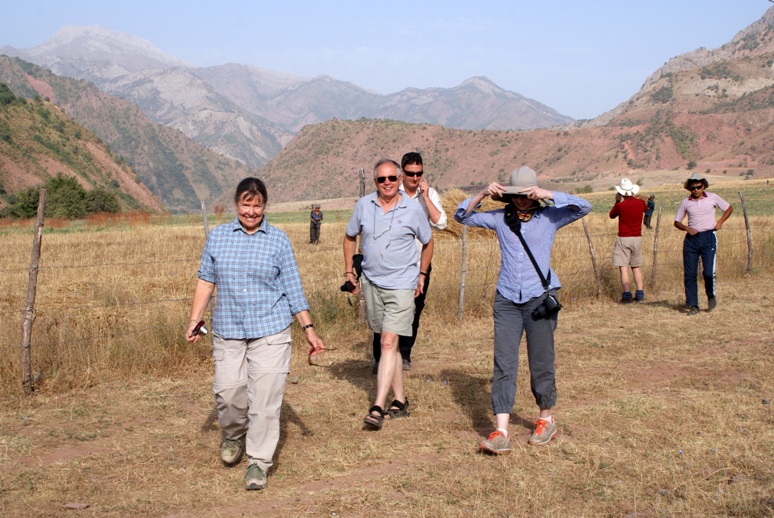
REPORT In the period from 9 through 23 August 2011, VIR organized a collecting mission to South Kazakhstan. The total distance of the route amounted to 2400 km. The route passed through four regions, namely Almatynsky, Dzhambulsky, South-Kazakhstansky, Kyzylordinsky, and covered the major areas of melon irrigated cultivation: from the Karatau foothills with their temperate climate in Southeastern Kazakhstan (Almaty) through the Chuiskaya valley to the Kyzylordy semidesert area in the southwest. The collecting team included A. Artemjeva (VIR, Russia), Zh. Mamyrbekov (the Institute of Vegetable Crops and Potato, Kazakhstan), V. Tyan (the Institute of Rice Cultivation, Kazakhstan), K. Tanaka (Hirosaki University) and M. Sugiyama (NARO Institute of Vegetable and Tea Science). The main objective of the expedition was to collect seed of local melons (Cucumis melo L.) and watermelons (Citrullus lanatus L.) distributed in southern Kazakhstan, review populational diversity among endemic Cucurbits, as well within those introduced from the neighboring countries (mainly from Uzbekistan), identify morphological and biological traits of the collected crops, including their biochemical parameters. Previously, melons and gourds were sampled in different regions of South Kazakhstan in 1996 by a collecting mission headed by Prof. Nickolay Dzyubenko. Over the last 15 years, the melon, watermelon and vegetable crops diversity has substantially changed in Kazakhstan partially due to the energetic promotion of Dutch varieties and hybrids. The population of southern Kazakhstan cultivates mainly Crimson sweet, an American watermelon variety, which forced out the local varieties. At the same time, European and American melon varieties were not welcomed by the local people because they failed to meet the requirements to fruit size, appearance, storage period, flesh quality and taste. Over the last years Kazakh breeders developed several new melon varieties, however their seed is not available for purchase yet. Under these circumstances, Kazakh farmers grow melons using their own seeds selected according to their personal taste preferences. Quite often, different melon varieties are cultivated at one and the same field without special isolation. The hybrids resulting from open pollination provide a material for further selection. The boom of folk breeding observed in the explored regions yields new forms that are promising in terms of taste, size, morphological traits, flesh color and quality, and keeping ability. As a result, 157 accessions of melon, watermelon, pumpkin and marrow were brought VIR. Besides, three samples of weedy melon (var. Agrestis) were found in Chiili area for the first time. They represent a valuable breeding material tolerant to abiotic and biotic stresses. Collecting mission in Mass media: Seeds of High Asia |